





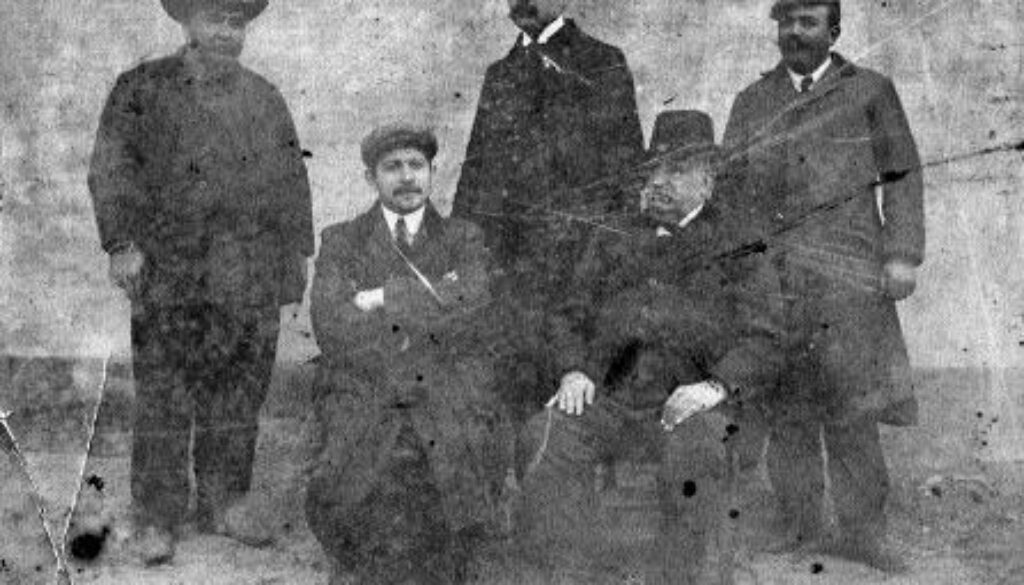
Giovanni Battista Sanguinetti (italiano e inglese)
C’è una lunga storia di immigrati che si sono fatti una nuova vita in America alla fine del diciannovesimo secolo. Per la maggior parte, molti associano l’immigrazione alle città del nord, soprattutto italiane. Anche se questo è in gran parte vero, alcuni italiani si sono stabiliti nel sud. L’immigrazione è un argomento interessante e spesso evoca la visione romantica delle “masse ammucchiate” che raggiungono l’America per trovare la loro fortuna. Tuttavia, la maggior parte degli immigrati non ha trovato fortuna, ma ha comunque trovato una nuova vita in America. Tra il 1880 e il 1920, oltre quattro milioni di italiani emigrarono in America.
Giovanni Battista Sanguinetti.
Sanguinetti era originario di Genova, Italia ed emigrò negli Stati Uniti nel 1879 (Charleston Citizenship Roll, 1886). Entrò nel paese attraverso New York e si stabilì a Charleston, SC. Sanguinetti, come la maggior parte degli immigrati italiani in questo periodo, era giovane. Aveva 25 anni. Affinché Sanguinetti si inserisse nella comunità di Charleston, ha “americanizzato” il suo nome. Giovanni Sanguinetti divenne John Sanguinett. Questo cambiamento si è riflesso nel City of Charleston Directory e nel suo certificato di morte. Secondo il Charleston Citizenship Roll, Sanguinetti era un marinaio di professione. Una volta stabilitosi a Charleston, lavorò per la Clyde Steamship Line come scaricatore di porto, secondo il City of Charleston Directory del 1897. Gli immigrati italiani erano molto comunemente impiegati come scaricatori di porto perché erano disposti a lavorare per salari più bassi (Associazione Internazionale degli scaricatori di porto, 2010). Ciò creò un grande conflitto con gli irlandesi, poiché avevano una salda presa sui lavori portuali. Molti datori di lavoro hanno sfruttato questo conflitto per approfittare del lavoro degli italiani per un salario più basso. Gli immigrati a Charleston hanno affrontato difficoltà come l’occupazione e l’alloggio. Gli immigrati sono stati relegati a vivere in aree specifiche del centro di Charleston. Essi, insieme ad altri immigrati, avrebbero dovuto vivere a est di King Street ea nord di Broad Street. Questa zona comprende l’attuale quartiere storico, compreso il “mercato”. Sulla base dei certificati di nascita e morte di Charleston, durante la sua vita, Giovanni ha vissuto in tutta questa zona: Anson Street, Pinckney Street e Queen Street (tre luoghi diversi su Queen Street). Queste tre strade sono importanti perché vicine a cose che sarebbero state molto importanti: il lavoro e la chiesa. Giovanni ha lavorato al molo di Queen Street della Clyde Line e ha frequentato la chiesa nella Cattedrale di San Giovanni Battista in Broad Street. Entrambi questi posti erano facilmente raggiungibili a piedi.
Giovanni trascorse la maggior parte della sua vita lavorando. Lavorava quotidianamente al molo di carico e scarico delle navi. Sanguinetti era il lavoratore “comune” che la Clyde Line vantava potesse essere evitato usando le loro nuove passerelle che attraversavano i moli (. Gli italiani non erano desiderabili come immigrati in South Carolina. Ben Tillman, uno dei più ferventi razzisti della South Carolina, ha parlato molto forte contro il reclutamento di italiani nella Carolina del Sud. Tillman, e altri, preferirono reclutare immigrati dal Nord Europa. Per sostituire i lavoratori agricoli afroamericani e in seguito reclutare i lavoratori delle fabbriche, la Carolina del Sud creò un Bureau of Immigration nel 1881. In Italia e nelle città del Nord, come New York, molti lavoratori italiani sono stati reclutati da padroni per gli stati del Sud. I padroni erano italiani pagati per reclutare lavoratori italiani per venire in America. Molti italiani sono stati reclutati come fittavoli, ma non hanno mostrato interesse per questo. Di quelli che sono rimasti nello stato, molti sono andati a vivere in città, come Charleston.
There is a long history of immigrants making a new life for themselves in America during the late nineteenth century. For the most part, many associate immigration with northern cities, especially Italians. Although this is largely true, some Italians settled in the South. Immigration is an interesting topic and often evokes the romantic vision of “huddled masses” reaching America to find their fortune. However, most immigrants did not find fortune, but they did, however, find a new life in America. Between 1880 and 1920, over four million Italians immigrated to America.
Giovanni Baptista Sanguinetti.
Sanguinetti was a native of Genoa, Italy and immigrated to the United States in 1879 (Charleston Citizenship Roll, 1886). He entered the country through New York and settled in Charleston, SC. Sanguinetti, like most Italian immigrants during this period, was young. He was 25-years old. In order for Sanguinetti to fit into the Charleston community, he “Americanized” his name. Giovanni Sanguinetti became John Sanguinett. This change was reflected in the City of Charleston Directory and his death certificate. According to the Charleston Citizenship Roll, Sanguinetti was a sailor by trade. Once he settled in Charleston he worked for the Clyde Steamship Line as a longshoreman, according to the 1897 City of Charleston Directory. Italian immigrants were very commonly employed as longshoremen because they were willing to work for lower wages (International Longshoremen’s Association, 2010). This created a great conflict with the Irish, as they had a firm hold on the dock jobs. Many employers exploited this conflict so that they could take advantage of the Italians’ working for a lower wage. Immigrants in Charleston faced difficulties such as employment and housing. Immigrants were relegated to live in specific areas of downtown Charleston. They, along with other immigrants, were expected to live east of King Street and north of Broad Street. This area encompasses the current historical district, including the “market.” Based on Charleston birth and death certificates, during his life, Giovanni lived throughout this area: Anson Street, Pinckney Street, and Queen Street (three different places on Queen Street). These three streets are important as they are close to the things that would have been very important: work and church. Giovanni worked at the Clyde Line’s Queen Street wharf and attended church at the Cathedral of Saint John the Baptist on Broad Street. Both of these places were well within walking distance.
Giovanni spent most of his life working. He worked daily on the wharf loading and unloading ships. Sanguinetti was the “common” worker that the Clyde Line boasted could be avoided by using their new walkways that spanned the wharfs. Italians were not desirable as immigrants in South Carolina. Ben Tillman, one of South Carolina’s most fervent racists, spoke very strongly against recruiting Italians to South Carolina. Tillman, and others, preferred to recruit immigrants from Northern Europe. To replace African American farm workers and later recruit mill workers, South Carolina created a Bureau of Immigration in 1881. In Italy and Northern cities, such as New York, many Italian workers were recruited for Southern states by padroni. The padroni were Italians who were paid to recruit Italian workers to come to America. Many Italians were recruited to be tenant farmers, but they did not show an interest in it. Of those who stayed in the state, many went to live in cities, such as Charleston.