




L’Isola delle Lacrime – The Island of Tears
Per la maggior parte di questa generazione di immigrati italiani, i primi passi sul suolo statunitense sono stati mossi in un luogo che ora è diventato una leggenda: Ellis Island.
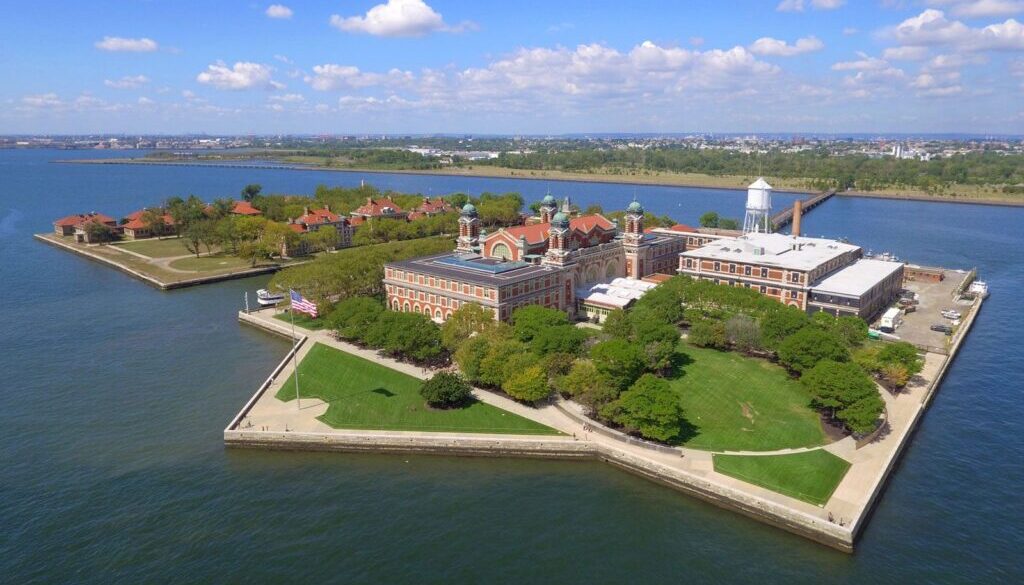
Ellis Island è stata fondata come soluzione a una grave crisi sociale. La precedente stazione di trattamento degli immigrati di New York, una fortezza in decomposizione chiamata Castle Garden, era diventata un pozzo di corruzione e furto, dove i nuovi immigrati dovevano sfidare truffatori, borseggiatori e rapinatori a mano armata prima di scappare con la loro libertà e le loro scartoffie. Al fine di garantire un processo di ingresso sicuro, controllato e regolamentato, il governo federale ha rilevato il trattamento degli immigrati e ha eretto una serie di nuove strutture appositamente costruite su un’isola nel porto di New York.
La stazione di immigrazione di Ellis Island ha rappresentato un nuovo tipo di istituzione governativa ed è diventata un simbolo duraturo dell’esperienza degli immigrati negli Stati Uniti. Durante i quarant’anni in cui ha operato, Ellis Island ha visto oltre 12 milioni di immigrati passare attraverso i suoi cancelli, a un ritmo fino a 5.000 persone al giorno. Per molte generazioni di americani, e per quasi tutti gli italoamericani, Ellis Island è il primo capitolo della storia della loro famiglia negli Stati Uniti.
Quando il primo gruppo di immigrati sbarcò a Ellis Island nel 1892, si trovò nella morsa di uno sconcertante, sebbene ancora ordinato, regime di procedure burocratiche. I nuovi arrivati sono stati numerati, smistati e inviati attraverso una serie di ispezioni, dove sono stati controllati per l’idoneità fisica e mentale e per la loro capacità di trovare lavoro negli Stati Uniti. Le conseguenze di un esame oculistico fallito o di sembrare troppo fragili per il lavoro manuale, potrebbe essere devastante; un membro di una famiglia potrebbe essere rimandato in Italia, magari per non rivedere mai più i propri cari, a causa di un accenno di tracoma o di un ispettore negligente. Sebbene meno del 2% degli italiani sia stato respinto, il timore di una tale separazione ha portato alcuni immigrati a ribattezzare Ellis Island L’Isola delle Lacrime, l’Isola delle Lacrime.
Anche per coloro che hanno superato con successo la batteria di ispezioni, Ellis Island non è stata generalmente un’esperienza piacevole. I regolamenti erano confusi, la folla disorientava, i funzionari si precipitavano e il frastuono di innumerevoli lingue in competizione doveva essere irritante per i nervi. Il momento della partenza, quando gli immigrati di successo si sono imbarcati sui traghetti per New York City o per destinazioni più a ovest, è stato un enorme sollievo.
————————————————————————————————————————–
For most of this generation of Italian immigrants, their first steps on U.S. soil were taken in a place that has now become a legend—Ellis Island.
Ellis Island was founded as a solution to a serious social crisis. New York’s previous immigrant processing station, a decaying fortress called Castle Garden, had become a pit of corruption and theft, where new immigrants had to run a gauntlet of swindlers, pickpockets, and armed robbers before escaping with their freedom and their paperwork. In order to ensure a safe, controlled, and regulated entry process, the federal government took over immigrant processing and erected a set of new, purpose-built facilities on an island in New York Harbor.
The immigration station at Ellis Island represented a new type of government institution and has become an enduring symbol of the immigrant experience in the United States. During the forty years it operated, Ellis Island saw more than 12 million immigrants pass through its gates, at a rate of up to 5,000 people a day. For many generations of Americans, and for almost all Italian Americans, Ellis Island is the first chapter of their family’s story in the United States.
When the first group of immigrants disembarked on Ellis Island in 1892, they found themselves in the grip of a bewildering, though still orderly, regime of bureaucratic procedures. Newcomers were numbered, sorted, and sent through a series of inspections, where they were checked for physical and mental fitness and for their ability to find work in the U.S. The consequences of failing an eye exam, or of seeming too frail for manual labor, could be devastating; one member of a family could be sent back to Italy, perhaps never to see his or her loved ones again, because of a hint of trachoma or a careless inspector. Although less than 2 percent of Italians were turned away, fear of such a separation led some immigrants to rename Ellis Island L’Isola delle Lacrime – The Island of Tears.
Even for those who made their way successfully through the battery of inspections, Ellis Island was generally not a pleasant experience. The regulations were confusing, the crowds disorienting, the officials rushed, and the hubbub of countless competing languages must have been jarring to the nerves. The moment of departure, when successful immigrants boarded ferries for New York City or destinations further west, came as a tremendous relief.